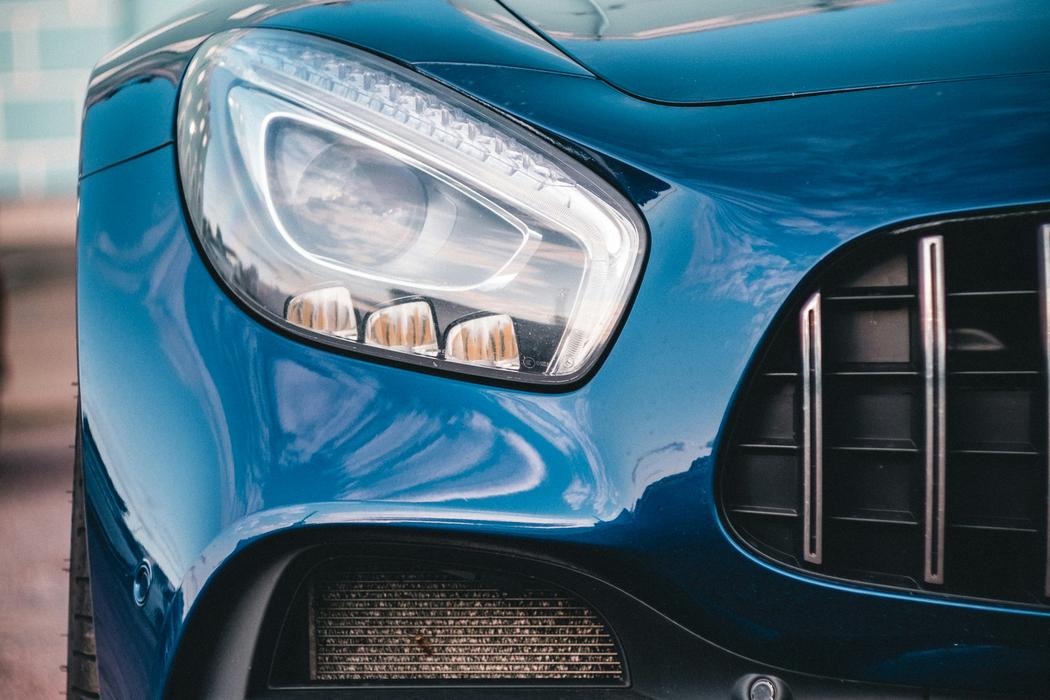
The paint correction process is cutting imperfections in the clear coat to remove them. Detailers use heavy-duty machine polishers, high-grade pads and abrasive compounds to get rid of swirl marks, minor scratches, oxidation and water spots and then the paint looks almost brand-new. Here’s a deeper breakdown:
1. Initial Assessment & Inspection
- We start by examining every panel under bright LED lighting (angled, side light, overhead) to reveal swirl marks, fine scratches, haze, oxidation, water spots, etc.
- We use a paint thickness gauge to check clear coat depth, to ensure we don’t over-correct.
- We document defects to show you “before” and align expectations for “after.”
This assessment helps us plan exactly how many correction stages are needed.
2. Washing & Decontamination
Before polishing, the paint must be as clean and contaminant-free as possible.
- Hand wash with a pH-neutral shampoo, two-bucket method, microfiber mitts.
- Iron/fallout remover spray (dwell + rinse) to dissolve embedded metallic particles (rail dust, brake dust).
- Clay bar / clay mitt with lubricant to gently pull out bonded contaminants that normal washing can’t remove.
After this, the surface should feel very smooth (almost glass-like) and ready for polishing.
3. Masking & Protection
To protect trim, rubber/badges, emblems, seals, and edges, we mask them off or shield them so polish or compound doesn’t accidentally mar non-painted surfaces.
4. Machine Polishing / Correction Stages
This is the core of paint correction. The number of stages depends on how bad the defects are.
Single-Stage Correction
- Use a moderate cutting or one-step polish + pad.
- Work in small sections (e.g. 12″×12″ or 16″×16″) with a dual-action (DA) polisher.
- Spread product at low speed, then increase speed and apply light to moderate pressure.
- Use overlapping passes (horizontal, vertical, diagonal) to cover the section evenly.
- Stop, wipe, inspect — if defects are cleared, move on.
This removes light to moderate imperfections, improving clarity and gloss.
Multi-Stage Correction (Two- or Three-Stage)
- Stage 1 (Cutting): More aggressive compound + pad (e.g. microfiber or wool) to remove deeper swirls, oxidation.
- Stage 2 (Refining): Medium polish + pad to reduce micro-marring left by the cutting stage.
- Stage 3 (Finishing): Fine polish + soft foam pad for maximum gloss, removing haze, fine polish haze, and any buffer trails.
Each subsequent stage polishes out micro-scratches left by the prior stage until only clarity and shine remain.
Between passes or stages, we often clean or refresh pads and wipe down the surface to monitor progress.
5. Quality Control & Inspection
- After polishing each panel, we re-inspect under strong lighting to catch any remaining defects, buffer trails, haze, or uneven finish.
- Use compressed air to blow out residual polish from panel gaps, trim, etc.
- Final wipe-downs with clean microfiber towels (sometimes with isopropyl alcohol / panel wipe) to remove polish oils and reveal the true surface.
If small defects remain, we may spot-correct them.
6. Final Protection
If purchased once the paint finish is perfected, we apply a protective layer — typically a ceramic coating or premium sealant — to preserve the corrected surface. This locks in the gloss, shields from UV, water spots, contamination, and makes future maintenance easier.
Results You Can Expect
- Dramatic improvement in gloss, clarity, and paint depth
- Swirls, light scratches, haze, and oxidation reduced or removed
- A smooth, mirror-like finish
- A better surface for protective coatings to bond to
However, deep scratches, chips, peeling clear, dents, or damage through the paint layer cannot be fully corrected with polishing — those require body shop or repainting.
How Long It Takes
Time varies depending on the vehicle’s size, paint condition, and number of correction stages:
- Single-stage correction on a compact/medium car: ~4 to 6 hours
- Two-stage correction (for moderate defects): ~8 to 12 hours
- Three-stage or extreme correction (for show-quality finish or heavily damaged paint): over 12 hours, sometimes across multiple days
We always give you a more precise estimate after the inspection stage.
How Long the Results Last
- Without protection, you may see new swirls and minor defects within months.
- With a quality protective coating (ceramic or premium sealant), your corrected finish can last 2–5 years (depending on the coating, maintenance, and environment).
- Regular maintenance (safe washing, quick-detailer sprays, avoiding abrasive contact) is critical to preserving the results.
Cost Estimate
At Royal Detailing SD, paint correction pricing typically ranges from $250 to $800+ depending on:
- Vehicle size
- Paint condition and defect severity
- Number of correction stages required
- Additional protection (e.g. ceramic coating) or services